
Inclusion of Nerses the Gracious in the Roman Martyrology
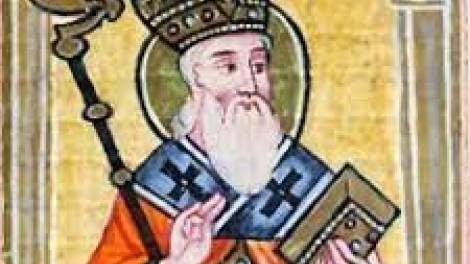
On Monday, May 18, 2026, on the occasion of the visit of His Holiness Aram I, Catholicos of Cilicia, the Holy Father announced the inclusion of Saint Nerses the Gracious in the Roman Martyrology.
Nerses Shnorhali (1102 – August 13, 1173), Catholicos of Armenia from 1166 to 1173, is recognized and venerated by the Armenian tradition as one of its greatest saints. Remembered as a pastor, theologian, poet, hymn writer, and forerunner of modern ecumenism, he received the title “Shnorhali” from his contemporaries for the irenic nature of his writings.
During his ministry as bishop and Catholicos, he worked for reconciliation among the Churches, especially between the Armenian Church and the Byzantine Orthodox Church. His hymns are part of the Armenian liturgy—both Apostolic and Catholic—and numerous churches are dedicated to him.
In the wake of St. Gregory of Narek, the 21 Coptic Martyrs of Libya, and St. Isaac of Nineveh, the inclusion of St. Nerses the Gracious in the Roman Martyrology demonstrates that holiness did not end with the schisms and that it exists beyond confessional boundaries.
As the Second Vatican Council declared, “it is right and salutary to recognize the riches of Christ and the virtuous works in the lives of others, who bear witness to Christ, sometimes even to the shedding of their blood” (Unitatis Redintegratio 4). St. John Paul II, for his part, declared that “the communio sanctorum speaks louder than the factors of division” (Tertio Millennio Adveniente 37) and that “in a theocentric vision, we Christians already have a common martyrology” (Ut Unum Sint 84).
The recent Synod on Synodality also recalled that “the example of the saints and witnesses to the faith from other Churches and Christian Communities is a gift we can receive by including their memory in our liturgical calendar” (Final Document 122).
It is hoped that the inclusion in the M Roman Martyrology of Nerses Shnorhali, a witness to the precious Christian spiritual heritage of the Armenian tradition, will contribute to the rediscovery of his teaching and to the unity of all Christ’s disciples.