AUDIENCE
À LA DÉLÉGATION DU PATRIARCAT ŒCUMÉNIQUE DE CONSTANTINOPLE
À L'OCCASION DE LA FÊTE DES SAINTS PIERRE ET PAUL
Mardi, 30 juin 2026
Éminence,
chers frères dans le Christ,
Je suis très heureux de vous rencontrer, après avoir célébré ensemble hier la fête des apôtres Pierre et Paul, patrons de cette Église qui est à Rome. Votre présence parmi nous exprime la proximité fraternelle de l’Église sœur qui est à Constantinople et de son pasteur et guide, Sa Sainteté Bartholomée, patriarche œcuménique. Je lui suis profondément reconnaissant, ainsi qu’à tous les membres du Saint-Synode, d’avoir voulu vous envoyer à Rome, pour poursuivre le traditionnel échange de visites à l’occasion des fêtes des saints Patrons de nos Églises respectives.
À ce propos, je garde un vif souvenir de ma participation à la célébration de saint André, dans l’église patriarcale Saint-Georges au Phanar, le 30 novembre dernier. Je me souviens avec joie et reconnaissance des rencontres que j’ai eues avec Sa Sainteté Bartholomée, au cours desquelles nous avons pu approfondir notre amitié réciproque et partager nos vues sur de nombreuses questions, en particulier le désir commun de progresser sur le chemin vers la pleine unité entre tous les chrétiens.
Dans cette perspective, la commémoration du 1700e anniversaire du premier Concile de Nicée, qui s’est tenue la veille de la fête de Saint André à İznik, à l’invitation du patriarche Bartholomée et en présence de représentants d’autres Églises et communautés ecclésiales, a représenté un témoignage éloquent de la communion qui existe déjà entre tous ceux qui partagent la foi en Dieu, Père de tous les hommes, et confessent le Seigneur et Fils de Dieu Jésus Christ et l’Esprit Saint, qui nous inspire et nous conduit à la plénitude de la vérité et de l’unité. À la lumière de cet événement commémoratif, il est apparu évident que le Credo de Nicée doit être la base et le critère de référence de ce processus, en proposant le modèle de véritable unité dans la légitime diversité: Unité dans la Trinité, Trinité dans l’Unité (cf. Lett. ap. In unitate fidei, n. 12). Puisse le chemin vers la célébration du deuxième millénaire de la Rédemption en 2033, être un parcours en union entre toutes les Confessions chrétiennes du monde, en redécouvrant le don et l’appel à être témoins du Ressuscité.
À une époque caractérisée par des guerres et par une polarisation croissante, ainsi que par des divisions culturelles et sociales, les chrétiens, réconciliés entre eux et unis dans la profession de l’unique foi, sont appelés à être un signe crédible de paix, en contribuant de façon décisive à l’engagement dans ce sens de tous les hommes et femmes de bonne volonté. En effet, dans la situation actuelle, c’est non seulement la crédibilité de l’annonce chrétienne qui est en jeu, mais l’avenir même de l’humanité. L’exigence d’une plus grande collaboration entre les chrétiens face aux défis actuels, comme la paix, le bon usage des nouvelles technologies, la sauvegarde de la création, découle de l’Évangile même de Jésus Christ: en effet, la responsabilité à l’égard de la vie et de la dignité de chaque être humain, à partir des plus petits et de ceux dans le besoin, est le critère qui décide de notre destin présent et éternel (cf. Mt 25, 31-46).
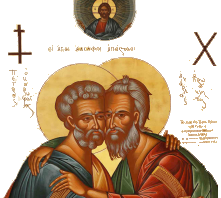
Éminence, chers frères, je vous renouvelle de tout cœur ma gratitude pour votre visite, ainsi que pour votre engagement personnel et celui du Patriarcat œcuménique en vue de promouvoir la sainte cause de l’unité des chrétiens. Je vous assure de ma prière, par l’intercession des saints apôtres Pierre et André, frères dans la chair et dans la foi, et je demande à Dieu notre Père de vous accompagner toujours par sa bénédiction. Merci!
Copyright © Dicastery for Communication - Libreria Editrice Vaticana
ADDRESS OF HIS HOLINESS LEO XIV
TO THE DELEGATION OF THE ECUMENICAL PATRIARCHATE
ON THE OCCASION OF THE SOLENNITY OF SAINTS PETER AND PAUL
Tuesday, 30 June 2026
Your Eminence,
Dear brothers in Christ,
I am very pleased to meet you, following our celebration yesterday of the Solemnity of Saints Peter and Paul, the patron saints of this Church in Rome. Your presence amongst us expresses the fraternal closeness of our sister Church in Constantinople and of its shepherd and guide, His All Holiness Bartholomew, Ecumenical Patriarch. I am deeply grateful to him and to all the members of the Holy Synod for having sent you to Rome to continue the traditional exchange of visits on the feasts of the patron saints of our respective Churches.
In a particular way, I vividly remember participating last year in the Feast of Saint Andrew, at the Patriarchal Church of Saint George at the Phanar. I recall with joy and gratitude the meetings I had with His All Holiness Bartholomew, during which we were able to deepen our mutual friendship and share our views on numerous issues, above all our common desire to make progress on the path towards full unity amongst all Christians.
In this regard, the commemoration of the 1700th anniversary of the First Council of Nicaea was held on the eve of the Feast of Saint Andrew in İznik, at the invitation of Patriarch Bartholomew and in the presence of representatives of other Churches and ecclesial communities. This celebration offered an eloquent testimony to the communion that already exists amongst those who share faith in God, the Father of all, and who believe in Jesus Christ, as Lord and Son of God, and in the Holy Spirit, who inspires us and leads us to the fullness of truth and unity. That commemorative event made clear that the Nicene Creed must be the foundation and guiding principle of this ecumenical journey, offering the model of true unity within legitimate diversity: Unity in the Trinity, Trinity in Unity (cf. Apostolic Letter In Unitate Fidei, 12). May the journey towards the celebration of the second millennium of the Redemption, in 2033, be undertaken together by all the Christian denominations of the world, rediscovering the gift and the call to be witnesses to the Risen One.
In an age marked by wars and growing polarization, as well as cultural and social divisions, Christians — reconciled amongst themselves and united in their profession of the one faith — are called to be a credible sign of peace, making a decisive contribution to the efforts of all men and women of good will to build peace. Moreover, in the current situation, it is not only the credibility of the Christian message that is at stake, but the very future of humanity. The need for greater cooperation amongst Christians in the face of today’s challenges — which include peace, the proper use of new technologies and care for creation — stems from the Gospel of Jesus Christ itself. Indeed, our responsibility for the life and dignity of every human being, beginning with the youngest and most needy, is the criterion that will determine our present and eternal destiny (cf. Mt 25:31–46).
Your Eminence, dear brothers, I once again express my heartfelt gratitude for this visit, as well as for your personal commitment and that of the Ecumenical Patriarchate to promoting the holy cause of Christian unity. I assure you of my prayers. Through the intercession of the holy Apostles Peter and Andrew, brothers in the flesh and in faith, may God our Father accompany us always with his blessing. Thank you!
Copyright © Dicastery for Communication - Libreria Editrice Vaticana
ADDRESS OF HIS HOLINESS LEO XIV
TO THE DELEGATION OF THE ECUMENICAL PATRIARCHATE
ON THE OCCASION OF THE SOLENNITY OF SAINTS PETER AND PAUL
Tuesday, 30 June 2026
Your Eminence,
Dear brothers in Christ,
I am very pleased to meet you, following our celebration yesterday of the Solemnity of Saints Peter and Paul, the patron saints of this Church in Rome. Your presence amongst us expresses the fraternal closeness of our sister Church in Constantinople and of its shepherd and guide, His All Holiness Bartholomew, Ecumenical Patriarch. I am deeply grateful to him and to all the members of the Holy Synod for having sent you to Rome to continue the traditional exchange of visits on the feasts of the patron saints of our respective Churches.
In a particular way, I vividly remember participating last year in the Feast of Saint Andrew, at the Patriarchal Church of Saint George at the Phanar. I recall with joy and gratitude the meetings I had with His All Holiness Bartholomew, during which we were able to deepen our mutual friendship and share our views on numerous issues, above all our common desire to make progress on the path towards full unity amongst all Christians.
In this regard, the commemoration of the 1700th anniversary of the First Council of Nicaea was held on the eve of the Feast of Saint Andrew in İznik, at the invitation of Patriarch Bartholomew and in the presence of representatives of other Churches and ecclesial communities. This celebration offered an eloquent testimony to the communion that already exists amongst those who share faith in God, the Father of all, and who believe in Jesus Christ, as Lord and Son of God, and in the Holy Spirit, who inspires us and leads us to the fullness of truth and unity. That commemorative event made clear that the Nicene Creed must be the foundation and guiding principle of this ecumenical journey, offering the model of true unity within legitimate diversity: Unity in the Trinity, Trinity in Unity (cf. Apostolic Letter In Unitate Fidei, 12). May the journey towards the celebration of the second millennium of the Redemption, in 2033, be undertaken together by all the Christian denominations of the world, rediscovering the gift and the call to be witnesses to the Risen One.
In an age marked by wars and growing polarization, as well as cultural and social divisions, Christians — reconciled amongst themselves and united in their profession of the one faith — are called to be a credible sign of peace, making a decisive contribution to the efforts of all men and women of good will to build peace. Moreover, in the current situation, it is not only the credibility of the Christian message that is at stake, but the very future of humanity. The need for greater cooperation amongst Christians in the face of today’s challenges — which include peace, the proper use of new technologies and care for creation — stems from the Gospel of Jesus Christ itself. Indeed, our responsibility for the life and dignity of every human being, beginning with the youngest and most needy, is the criterion that will determine our present and eternal destiny (cf. Mt 25:31–46).
Your Eminence, dear brothers, I once again express my heartfelt gratitude for this visit, as well as for your personal commitment and that of the Ecumenical Patriarchate to promoting the holy cause of Christian unity. I assure you of my prayers. Through the intercession of the holy Apostles Peter and Andrew, brothers in the flesh and in faith, may God our Father accompany us always with his blessing. Thank you!
Copyright © Dicastery for Communication - Libreria Editrice Vaticana
ADDRESS OF HIS HOLINESS LEO XIV
TO THE DELEGATION OF THE ECUMENICAL PATRIARCHATE
ON THE OCCASION OF THE SOLENNITY OF SAINTS PETER AND PAUL
Tuesday, 30 June 2026
Your Eminence,
Dear brothers in Christ,
I am very pleased to meet you, following our celebration yesterday of the Solemnity of Saints Peter and Paul, the patron saints of this Church in Rome. Your presence amongst us expresses the fraternal closeness of our sister Church in Constantinople and of its shepherd and guide, His All Holiness Bartholomew, Ecumenical Patriarch. I am deeply grateful to him and to all the members of the Holy Synod for having sent you to Rome to continue the traditional exchange of visits on the feasts of the patron saints of our respective Churches.
In a particular way, I vividly remember participating last year in the Feast of Saint Andrew, at the Patriarchal Church of Saint George at the Phanar. I recall with joy and gratitude the meetings I had with His All Holiness Bartholomew, during which we were able to deepen our mutual friendship and share our views on numerous issues, above all our common desire to make progress on the path towards full unity amongst all Christians.
In this regard, the commemoration of the 1700th anniversary of the First Council of Nicaea was held on the eve of the Feast of Saint Andrew in İznik, at the invitation of Patriarch Bartholomew and in the presence of representatives of other Churches and ecclesial communities. This celebration offered an eloquent testimony to the communion that already exists amongst those who share faith in God, the Father of all, and who believe in Jesus Christ, as Lord and Son of God, and in the Holy Spirit, who inspires us and leads us to the fullness of truth and unity. That commemorative event made clear that the Nicene Creed must be the foundation and guiding principle of this ecumenical journey, offering the model of true unity within legitimate diversity: Unity in the Trinity, Trinity in Unity (cf. Apostolic Letter In Unitate Fidei, 12). May the journey towards the celebration of the second millennium of the Redemption, in 2033, be undertaken together by all the Christian denominations of the world, rediscovering the gift and the call to be witnesses to the Risen One.
In an age marked by wars and growing polarization, as well as cultural and social divisions, Christians — reconciled amongst themselves and united in their profession of the one faith — are called to be a credible sign of peace, making a decisive contribution to the efforts of all men and women of good will to build peace. Moreover, in the current situation, it is not only the credibility of the Christian message that is at stake, but the very future of humanity. The need for greater cooperation amongst Christians in the face of today’s challenges — which include peace, the proper use of new technologies and care for creation — stems from the Gospel of Jesus Christ itself. Indeed, our responsibility for the life and dignity of every human being, beginning with the youngest and most needy, is the criterion that will determine our present and eternal destiny (cf. Mt 25:31–46).
Your Eminence, dear brothers, I once again express my heartfelt gratitude for this visit, as well as for your personal commitment and that of the Ecumenical Patriarchate to promoting the holy cause of Christian unity. I assure you of my prayers. Through the intercession of the holy Apostles Peter and Andrew, brothers in the flesh and in faith, may God our Father accompany us always with his blessing. Thank you!
Copyright © Dicastery for Communication - Libreria Editrice Vaticana
ADDRESS OF HIS HOLINESS LEO XIV
TO THE DELEGATION OF THE ECUMENICAL PATRIARCHATE
ON THE OCCASION OF THE SOLENNITY OF SAINTS PETER AND PAUL
Tuesday, 30 June 2026
Your Eminence,
Dear brothers in Christ,
I am very pleased to meet you, following our celebration yesterday of the Solemnity of Saints Peter and Paul, the patron saints of this Church in Rome. Your presence amongst us expresses the fraternal closeness of our sister Church in Constantinople and of its shepherd and guide, His All Holiness Bartholomew, Ecumenical Patriarch. I am deeply grateful to him and to all the members of the Holy Synod for having sent you to Rome to continue the traditional exchange of visits on the feasts of the patron saints of our respective Churches.
In a particular way, I vividly remember participating last year in the Feast of Saint Andrew, at the Patriarchal Church of Saint George at the Phanar. I recall with joy and gratitude the meetings I had with His All Holiness Bartholomew, during which we were able to deepen our mutual friendship and share our views on numerous issues, above all our common desire to make progress on the path towards full unity amongst all Christians.
In this regard, the commemoration of the 1700th anniversary of the First Council of Nicaea was held on the eve of the Feast of Saint Andrew in İznik, at the invitation of Patriarch Bartholomew and in the presence of representatives of other Churches and ecclesial communities. This celebration offered an eloquent testimony to the communion that already exists amongst those who share faith in God, the Father of all, and who believe in Jesus Christ, as Lord and Son of God, and in the Holy Spirit, who inspires us and leads us to the fullness of truth and unity. That commemorative event made clear that the Nicene Creed must be the foundation and guiding principle of this ecumenical journey, offering the model of true unity within legitimate diversity: Unity in the Trinity, Trinity in Unity (cf. Apostolic Letter In Unitate Fidei, 12). May the journey towards the celebration of the second millennium of the Redemption, in 2033, be undertaken together by all the Christian denominations of the world, rediscovering the gift and the call to be witnesses to the Risen One.
In an age marked by wars and growing polarization, as well as cultural and social divisions, Christians — reconciled amongst themselves and united in their profession of the one faith — are called to be a credible sign of peace, making a decisive contribution to the efforts of all men and women of good will to build peace. Moreover, in the current situation, it is not only the credibility of the Christian message that is at stake, but the very future of humanity. The need for greater cooperation amongst Christians in the face of today’s challenges — which include peace, the proper use of new technologies and care for creation — stems from the Gospel of Jesus Christ itself. Indeed, our responsibility for the life and dignity of every human being, beginning with the youngest and most needy, is the criterion that will determine our present and eternal destiny (cf. Mt 25:31–46).
Your Eminence, dear brothers, I once again express my heartfelt gratitude for this visit, as well as for your personal commitment and that of the Ecumenical Patriarchate to promoting the holy cause of Christian unity. I assure you of my prayers. Through the intercession of the holy Apostles Peter and Andrew, brothers in the flesh and in faith, may God our Father accompany us always with his blessing. Thank you!
Copyright © Dicastery for Communication - Libreria Editrice Vaticana